

Designed for Certification
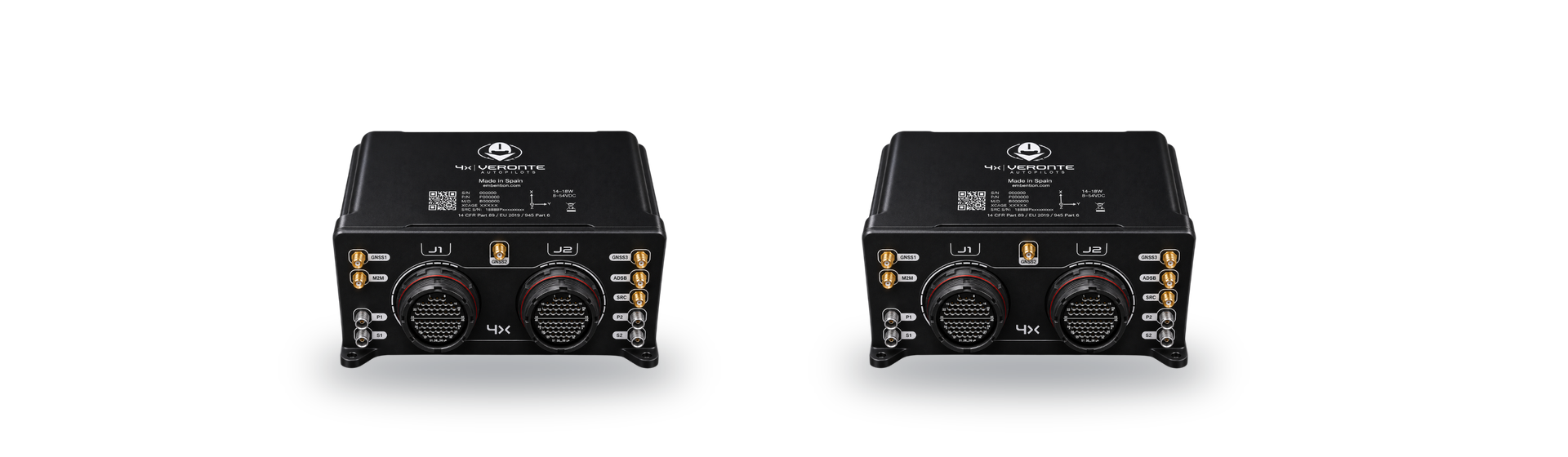
Developed under DO-178C and DO-254. The architecture is designed for DAL A software and hardware allowing distributed redundancy, for manned aircraft,Part 23 and Part 25 aircraft, SC-VTOL and certified UAS.
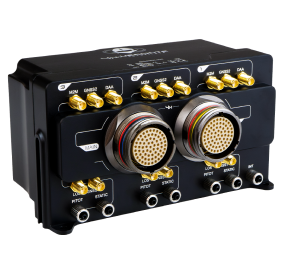
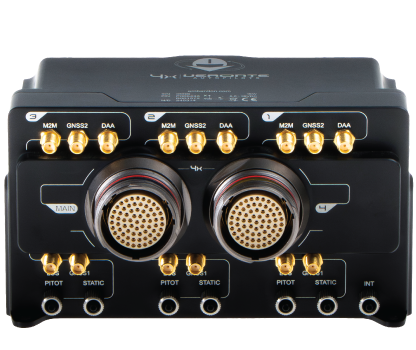
Triple-redundant flight control computer for manned and unmanned aircraft, with dissimilar processors and an independent sensor suite per lane and high-performance multicore processing, in a single unit. Designed for DAL A under DO-178C and DO-254, and suited for Part 23 and Part 25 aircraft, SC-VTOL powered lift, certified UAS and defense applications.
 Triple redundant
 Dissimilar design
 Dual-channel I/O
 Manned or Unmanned
 Multi-domain


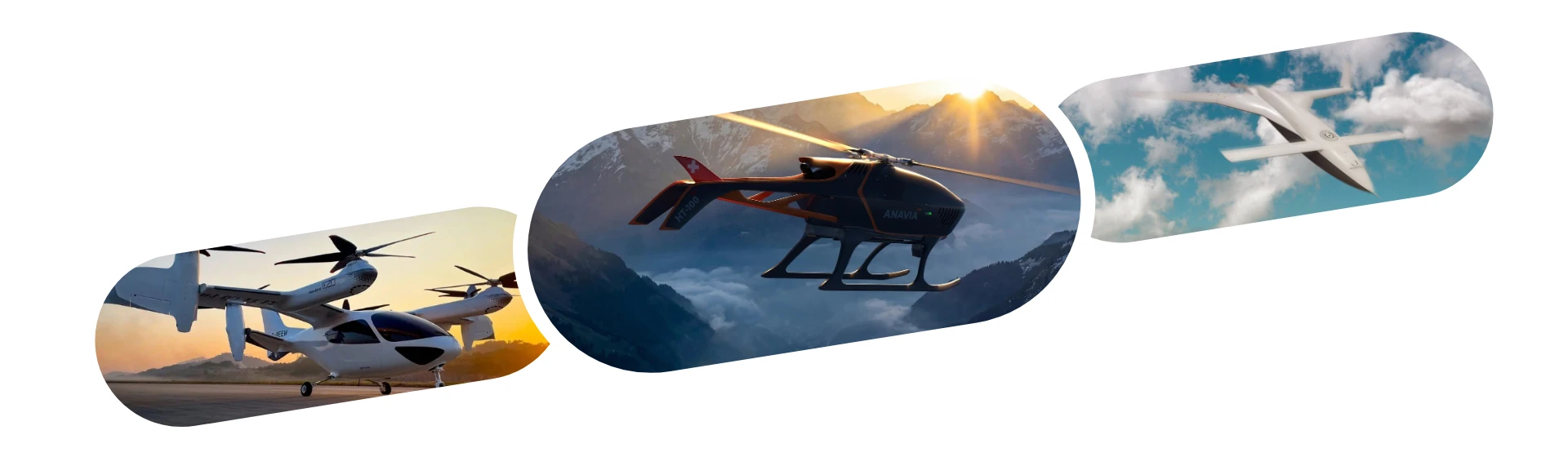
Advanced customization tools give aircraft manufacturers full control over the 4x. Control laws, navigation, failsafes, automations and mission logic can be defined in three ways, from model-based design to fully custom software, to match each certification strategy.

Control laws, navigation logic, failsafes and automations are built with graphical block diagrams. The output is a Parameter Data Item (PDI) aligned with DO-331, so verification of the application layer focuses on parameters against requirements instead of C-code structural coverage.

Proprietary C/C++ algorithms run on a dedicated processor core as Custom Executable Object Code (EOC), alongside certified Veronte software. User code does not compete for platform resources and can be modified and re-verified independently. It communicates and shares data with the Veronte software.

Integrators can run their own software or RTOS on the Primary lane while certified Veronte software runs on the Monitor and Recovery lanes as a safety monitor. The bare-metal platform is deterministic, and BSL and SDK licenses are available.
Designed and manufactured to the highest aerospace safety standards, Veronte Autopilot 4x is designed for DAL A and suited for Part 23 and Part 25 aircraft, powered lift under EASA SC-VTOL, certified UAS and defense applications. Designed for NDAA and the Blue UAS list, with trusted supply chains.
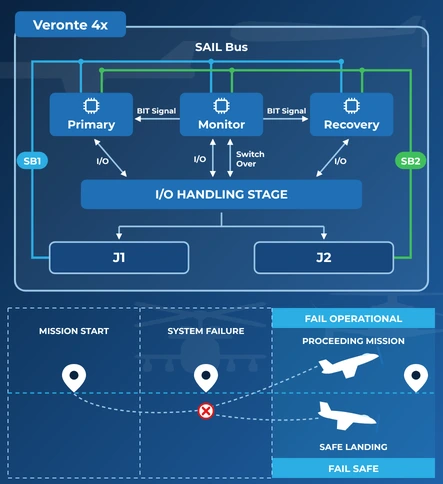
Veronte Autopilot 4x integrates three lanes with two processor types in a single 737 g unit. Each lane has its own mixed-technology IMUs, magnetometers, barometers and GNSS receiver and runs its own GNC. The Monitor checks system health and selects the lane in control via hardware multiplexers, switching to Recovery without affecting actuators.



Veronte Autopilot 4x integrates with the Veronte ecosystem and third-party equipment: LOS, 4G/LTE, Satcom and Starlink terminals, radar and vision for detect and avoid, ARINC 429 and TSN avionics, and CAN FD actuators and ESCs.













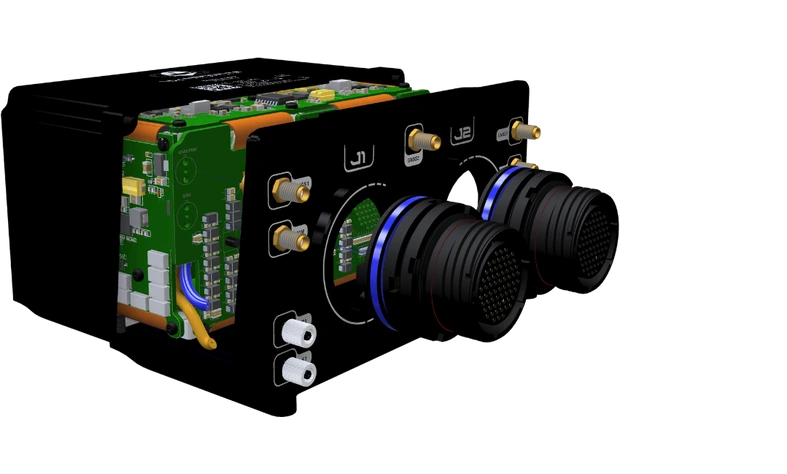
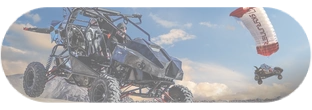

Advanced autonomy, navigation and safety functions for manned and unmanned aircraft, built into every Veronte Autopilot 4x.
Inertial navigation combined with wind estimation minimizes position drift when GNSS is lost or jammed. Veronte Vision PNT navigation or FOG IMUs can be added to further improve accuracy in GNSS-denied environments.
Triple redundant GNSS receivers with native heading provide two independent GNSS heading sources for accurate heading and attitude without relying only on magnetometers, reducing sensitivity to magnetic interference. Redundant pitot and static ports add reliable air data.
Supports multiple aircraft and control stations operating in a shared network. The built-in SRC module enables formation flight with relative positioning, coordinated missions and seamless handover of aircraft between operators.
Interfaces with a gimbal so the aircraft follows the camera pointing direction, letting the operator guide the flight intuitively. Altitude can be held or adjusted according to gimbal orientation.
Embedded avoidance algorithms adjust the route in real time to keep clear of traffic and obstacles. Detection uses the built-in ADS-B module and can be extended with external radar and vision systems.
Built-in ADS-B and Remote ID modules work in In and Out modes, broadcasting the aircraft position and receiving nearby traffic data. The built-in SRC (Short Range Communications) module can be configured as Remote ID, in line with FAA 14 CFR Part 89 and EU Regulation 2019/945 Part 6, or for swarming and formation flight.
Each lane records flight data on its own internal memory, rated down to -40 °C. Variables and logging rates are configurable, with continuous or event-based logging for post-flight analysis and certification evidence.
Compatible with LOS datalinks and with BLOS communications through the built-in LTE modem with eSIM, Satcom or Starlink. Redundant channels can be configured for mission-critical links, fleet management and UTM integration.
Onboard mission computers connect through STANAG 4586 to send high-level commands, receive real-time data and run advanced autonomy algorithms, while the 4x keeps full authority over flight control.
Native geofencing and geocaging keep the aircraft inside approved airspace and out of restricted zones, using geozone data in line with EN 4709-003 and EUROCAE ED-269. An independent flight termination output (FTS) provides a fail-safe action in case of total system failure.
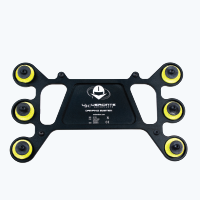
Damping system for Veronte autopilots 4x 2.2 Aluminum mounting with foam vibration isolation.
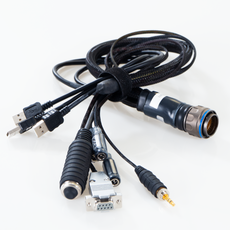
Development harness for 4x Veronte Autopilot 2.2 with circular connector.
| Architecture | Triple redundant, fail-operational |
| Processors | Two processor types across three lanes |
| Design assurance | DO-178C and DO-254, designed for DAL A |
| Connectors | 2x MIL-DTL-38999 (J1 / J2), dual channel |
| Weight | 737 g |
| Vehicles | Fixed-wing | VTOL | Multirotor | Helicopter | eVTOL | UGV | USV |
| Power consumption | 14 W nominal | 18 W peak |
| MTBF | 20,000 h per unit (IEC TR 62380) |
| Processing | Multicore processors, bare-metal deterministic execution |
| Protection rating | IP67 |
| Maximum acceleration | 32 g |
| Mounting | M3 screws (stainless steel for saline environments) |
| Installation | Any orientation |
Loading prices...