


DO-178C
DO-178C Software Considerations in Airborne Systems and Equipment Certification. Defines the standard used to demonstrate the reliability and airworthiness of on-board avionics software.
Embention is a pioneer in the application of aviation industry regulations for certification to autonomous vehicles. Following airworthiness standards such as DO178C, DO254, STANAG or DO160G, Embention is a leader in the development of autopilots and safety-critical avionics for the certification of eVTOL and UAVs.
At Embention, we take care of every detail of the development process from the early stages of the product lifecycle, starting with the design, where we apply airworthiness standards from traditional manned aviation to our systems and components for autonomous vehicles.
DO-178C Software Considerations in Airborne Systems and Equipment Certification. Defines the standard used to demonstrate the reliability and airworthiness of on-board avionics software.

DO-254 Design Assurance Guidance for Airborne Electronic Hardware. Establishes a classification system that allows hardware elements to be separated into simple or complex categories, providing systematic design guidelines.

DO-160 Environmental Conditions and Test Procedures for Airborne Equipment. Assesses the quality of systems by evaluating the environmental resistance and electromagnetic compatibility of electronic equipment installed on board aircraft.
In other words, the use of these airworthiness standards allows Embention to guide the design processes to ensure that both software development and on-board hardware are performed with the necessary guarantees for system certification. For this purpose, Embention is guided by the Design Assurance Level (DAL), which uses a range of 5 levels. Embention currently has the DAL-B compliance level, and it is working to move to the highest level, DAL-A.
Embention is approved as POA (Production Organization Approval) and APDOA (Alternative Procedure to Design Organization Approval), being the only company specialized in avionics for drones to obtain an EASA (European Union Aviation Safety Agency) approval to hold ETSO autopilot authorizations (ETSO C198). This achievement further solidifies Embention's dedication to safety and innovation, as well as its position as a leader in developing critical systems for autonomous vehicles, either manned or unmanned.
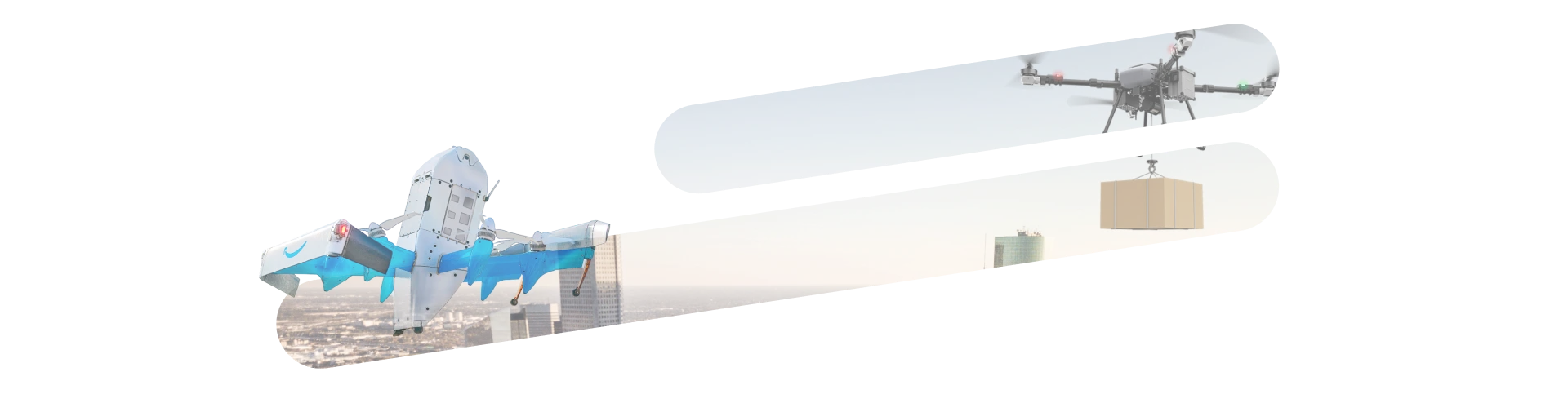

Embention is a pioneer in airworthiness certification for autonomous vehicles, specializing in UAVs (unmanned aerial vehicles) and eVTOLs (electric vertical take-off and landing aircraft). Its certification expertise ensures compliance with aeronautical standards and helps customers achieve certification milestones faster and more efficiently:

Embention has an independent Verification department, which is in charge of both software and hardware verification. For this purpose, it has a continuous development environment where requirements, tests, results, and all the necessary tools are included. Embention engineers carry out tests in order to ensure the quality of our avionics products, always in compliance with the DO178C, DO254 and DO160G certification standards.
Software verification follows the guidelines set by DO-178C. As a fundamental part of the software development assurance process, System Tests are performed to verify High Level Requirements (HLRs) and Unit Tests to verify Low Level Requirements (LLRs). This set of tests is run with each software release.

As part of its design verification, Embention pays special attention to environmental qualification testing. The DO160 and MIL-STD-810 standards adopted by the FAA and EASA, are the most commonly used. These are test methods, which make it possible to measure the influence of the environment on products. These tests are performed in a controlled environment, in a laboratory, allowing to guarantee the resistance of the products to certain environmental conditions (temperatures, flight altitude, vibrations, etc.).
The main differences between both standards lie in the industry, the adaptation process, and the technical considerations for the real operating environment of the equipment.
At Embention, we have equipment and laboratories to perform pre-qualification tests for resistance to vibration, temperature, pressure, IP67 and shock.
Embention relies on a solid foundation of frameworks to ensure excellence across every stage of its development and operations. These frameworks serve as the backbone of the company’s commitment to safety, performance, and compliance.
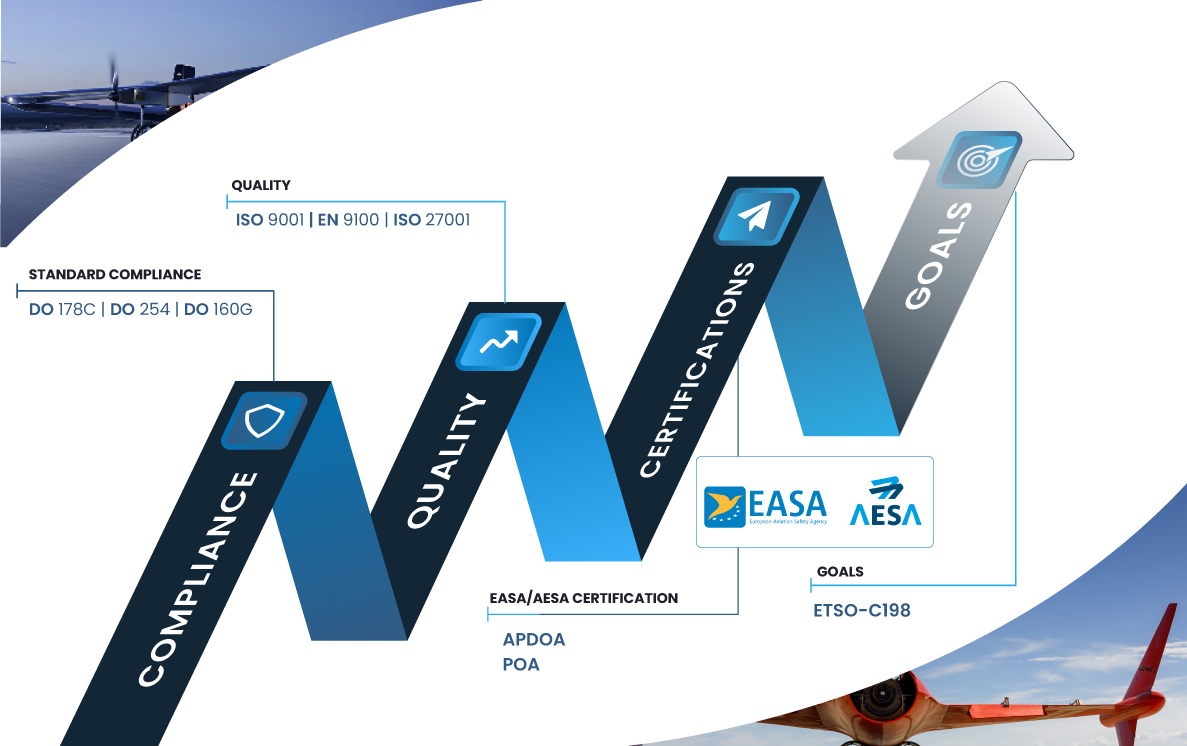
Embention has been approved as an APDOA (Alternative Procedure to Design Organization Approval) and a POA (Production Organization Approval) by the Spanish Aviation Safety Agency (AESA). It is the only company under EASA (European Union Aviation Safety Agency) supervision that is authorized to apply for and hold ETSO autopilot authorizations (ETSO C198). Embention is working with EASA to obtain an ETSOA (European Technical Standard Order Authorization) for the Veronte Autopilot. Once the process is complete, Embention's autopilot is set to be certified and will provide an EASA Form 1. This form certifies that the equipment has been designed and manufactured according to aeronautical standards. It will significantly reduce the effort required for eVTOL and UAV certification.
Airworthiness represents the capability of a system or component to operate with complete safety under the conditions for which it was designed. This principle is essential in the development of our avionics solutions, as it guarantees that each product meets the highest standards of safety, reliability, and quality demanded by the aeronautical industry. Embention applies international standards such as DO-178C, DO-254, and DO-160G, ensuring that both the software and hardware of its systems are suitable for integration into autonomous vehicles and facilitate obtaining aeronautical certifications.
Embention develops all its products under internationally recognized aeronautical standards, including the DO-178C standard for software, DO-254 for hardware, and DO-160G for environmental testing. Furthermore, the company is certified as POA and APDOA by AESA and EASA, which reinforces its capability to design and manufacture autopilots for Drones and eVTOLs under the most demanding criteria. These certifications consolidate Embention as a benchmark in compliance with the standards that guarantee the airworthiness of its products.
Compliance with airworthiness standards gives clients the confidence of working with systems designed under the same regulations that govern manned aviation. This allows for the reduction of time and costs associated with the certification process of their own aircraft, as Embention's components have already been developed and verified in accordance with applicable regulations. Furthermore, it ensures greater reliability, traceability, and operational safety in each integration, minimizing technical and regulatory risk in UAV and eVTOL projects that require a high level of regulatory compliance.
Embention has been a pioneer in applying aeronautical certification standards, such as DO-178C, DO-254, STANAG, and DO-160G, to the development of autonomous vehicles. Thanks to this, it leads the development of autopilots and critical avionics systems that meet the certification requirements for eVTOL and UAV, guaranteeing maximum safety and reliability in their operations.
