Euronext | MLUAV | € 38.00 | 05/19/2026

Autopilot KAI for C-UAS

C-UAS | High-Speed Neutralization

High-integrity flight control system specifically engineered for C-UAS interceptors and kinetic effectors. It fuses aerospace-grade reliability with AI-driven target acquisition. It supports radar-slaved guidance, autonomous threat tracking, and optimized terminal maneuvers.

Veronte Autopilot KAI for loitering munition and C-UAS

Mil-Grade C-UAS Interceptor Control

Precision threat neutralization in contested EW environments

Radar-slaved navigation diagram showing a ground control station linked via data beams to an interceptor drone and a target in flight.

Radar-slaved navigation

Integrated protocols for real-time target hand-off from ground-based radar systems, enabling the interceptor to execute "slew-to-cue" maneuvers with high-precision. The system fuses external radar telemetry with internal sensors to maintain an accurate intercept vector even when the target executes evasive patterns.
Interceptor aircraft performing high-G banking maneuvers to lock a red target reticle onto an agile UAV in mid-air.

High-Dynamics GNC

Aerospace-grade guidance and control laws optimized for high-G terminal maneuvers required to intercept small, agile class-1 and class-2 UAVs. Developed under DO-178C and DO-254 standards, the architecture ensures deterministic behavior during high-speed pursuits and aggressive banking maneuvers.
Interceptor jet with digital HUD and neural network overlay for real-time tracking and AI terminal guidance of airborne threats.

AI terminal guidance

High-performance processing module dedicated to real-time tracking of flying aircraft and loitering munitions. The system identifies tactical signatures at high frame rates, enabling autonomous lead-pursuit calculation for the precise interception of Shahed-class drones, Lancets, and other high-speed moving threats.
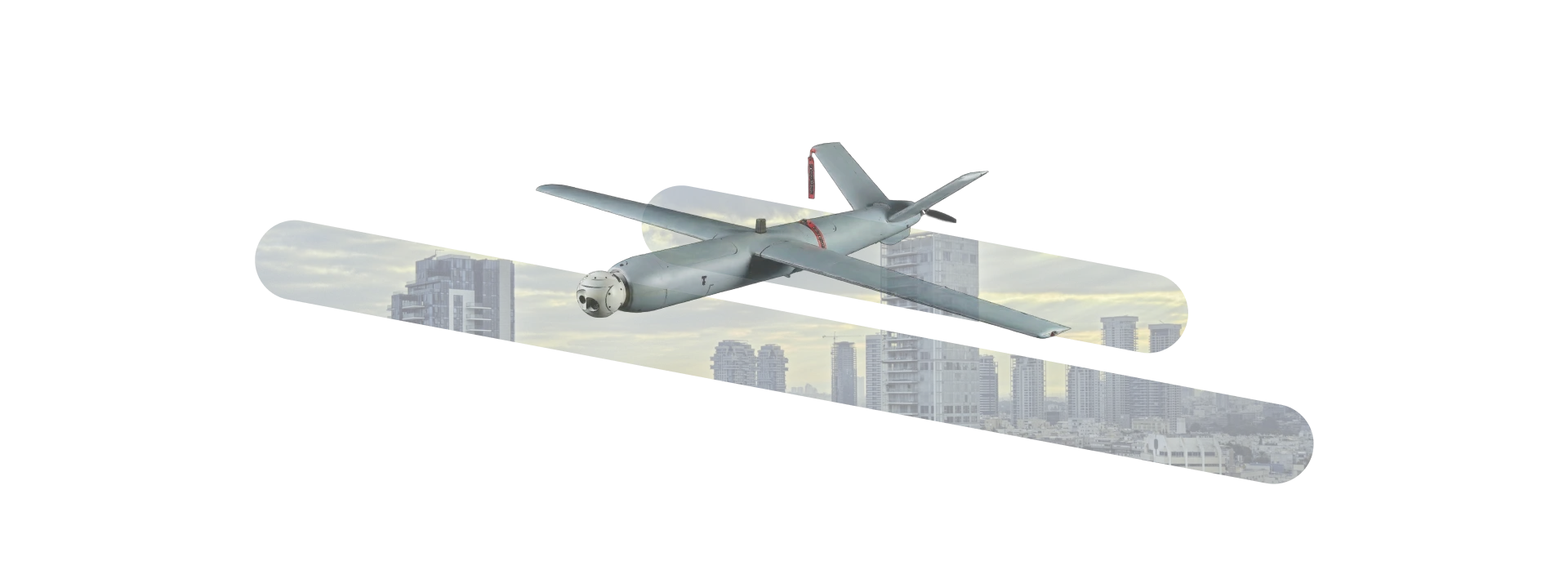
Surveillance drone with camera gimbal over a city skyline, representing the autopilot flexibility for any vehicle layout

Ready for any vehicle

The versatile Veronte framework accommodates every drone configuration and interceptor layout. Flight regimes, surface mixing, fluid transitions, and specialized logic can be seamlessly tailored to any aerial, ground-based, or nautical autonomous hazard-neutralization platform design.

Specialized Interception Performance

Custom engagement configuration tools grant absolute command over terminal pursuit logic and automated defensive routines. Vectoring parameters, impact sequences, and collaborative behaviors can be finely tuned to ensure the system is perfectly calibrated for high-stakes counter-UAS operations.

Interceptor aircraft following a calculated flight path to lock onto an intruder signature for high-precision engagement.

Homing & Intercept Logic

Advanced visual-inertial control loops lock onto intruder signatures for high-precision neutralizations while allowing the operator to verify the target via the data link. This seamless integration enables autonomous lead-calculation and manual course correction during the final high-speed engagement phase.

Diagram of synchronized interceptor drones in formation, coordinating a swarm-vs-swarm defense strategy against multiple targets.

Swarm Countermeasures

Scalable architecture supporting synchronized multi-interceptor operations to counter saturation attacks from drone swarms. This capability enables a "swarm-vs-swarm" defense strategy where multiple units share threat data to coordinate simultaneous interceptions and maintain optimal defensive coverage.

Drone in flight showing a green status bubble indicating 'Silent Mode' activated, with 'Comms Off' and 'Engine Off' icons, against a dark blue background with a red detection line.

Stealth Pursuit Modes

Dedicated stealth profiles including Acoustic Signature Reduction and Communications Silence to prevent detection by the rogue drone's sensors. By optimizing propulsion and RF emissions during the approach, the interceptor maximizes the probability of a successful surprise neutralization.

GNSS-Denied Navigation & EW Resilience

The CUAS variant employs a multi-tiered positioning safeguard, merging optical references with diverse telemetry streams to preserve navigational truth in GNSS-restricted, spoofed, or electronically contested battlefields.

  • Visual Odometry

    The internal optical odometry and terrain-matching algorithms that provide an independent positioning reference without satellite reliance. This SLAM-based technology fuses visual data with all available sensors to maintain navigational accuracy while chasing targets in contested environments.

  • Multi-Source Fusion

    A diversified positioning engine combining LTE signal triangulation with next-generation celestial navigation technology. These independent data channels are processed in real-time to generate a resilient and unjammable location fix, ensuring the interceptor stays on track during rapid pursuit cycles.

  • Anti-Jamming & Anti-Spoofing

    This platform incorporates proprietary jamming and spoofing detection which, alongside visual SLAM, establishes a robust defense against electronic countermeasures. The open hardware layout allows for direct integration with external anti-jamming antennas and advanced CRPA hardware.

All-In-One Integrated Hardware & Harness

All-In-One Integrated Hardware & Harness

Integrated Core Architecture

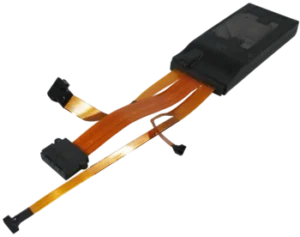
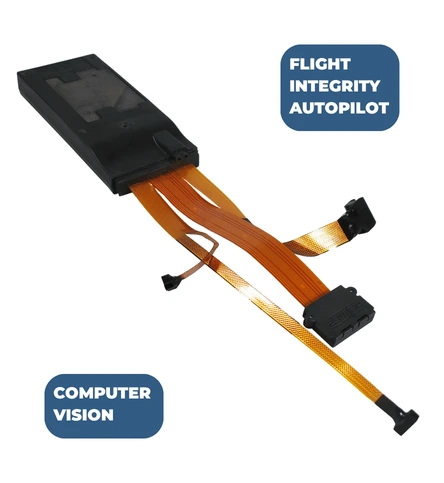
The Veronte Autopilot CUAS utilizes a consolidated electronics stack that merges safety-critical flight control, high-throughput Computer Vision, and a redundant internal sensor array into one unit. This unified design removes the requirement for external computers, creating a highly efficient brain for complex interception maneuvers.

Tailored Connectivity & Cabling

To accelerate field deployment, all port interfaces and wiring can be fully individualized and shipped as a complete, pre-validated harness built for the specific interceptor airframe. This modular approach significantly lowers manufacturing overhead and reduces integration timelines while maintaining signal purity across the entire defense system.

Global Manufacturing Excellence (Spain, USA & UAE)

Built for Industrial Scaling

The internal layout and component selection are specifically optimized for high-volume manufacturing pipelines to support rapid fleet expansion and competitive unit economics.

ITAR-Free & NDAA Certified

Engineered from the ground up to satisfy National Defense Authorization Act requirements for international security cooperation.

Aeronautical Grade

Software and hardware architectures are strictly aligned with DO-178C and DO-254 DAL B workflows to ensure reliable, deterministic system performance.

Sensor Integration

A compact fusion of triply-redundant IMUs, magnetometers, and static sensors housed in a hardened, low-mass chassis for uncompromising spatial orientation.

Combat-Ready Durability

Validated against MIL-STD-810 and DO-160G criteria to survive launch forces exceeding 35g and extreme thermal cycles from -40ºC to 60ºC.

Global Link Connectivity

Native compatibility with 4G/LTE, SATCOM, and Starlink peripherals, guaranteeing persistent oversight and command during long-range defensive operations.

Tactical Hand-off Logic

Robust features for transferring asset oversight between mobile teams or command centers to facilitate multi-layered defense-in-depth strategies.

Strategic Supply Chain

A secure, multi-continental (Spain, UAE, USA) manufacturing footprint that satisfies local content mandates while reducing risk in the face of geopolitical shifts.

AI-Driven Threat Neutralization

Dedicated algorithms for the identification and tracking of airborne hazards (Shahed, Lancet, etc.) to ensure high-lethality intercepts in jammed zones.

Interoperable STANAG 4586

Full adherence to STANAG 4586 standards, enabling the CUAS platform to communicate seamlessly with broader Allied air defense networks.