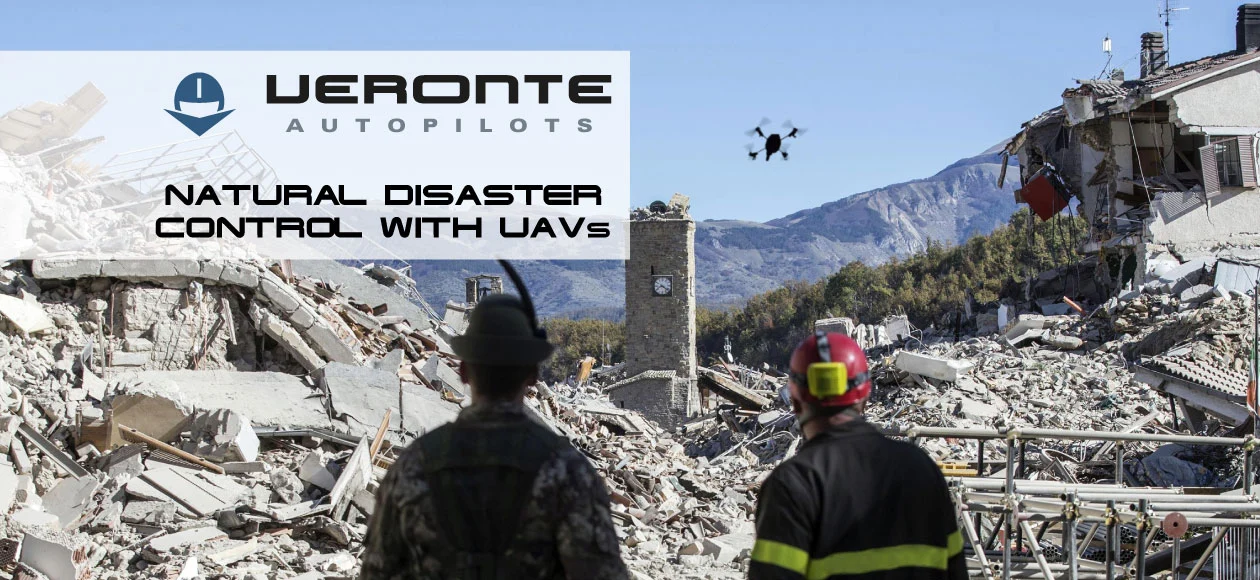
Earthquakes, floods, and hurricanes that are happening at present are becoming bigger and more dangerous, such as the last floods that took place in Houston, the Mexico earthquake, and the devastating consequences expected from the Maria hurricane. For this reason, emergency services and other state forces in many countries around the world are being surpassed due to the limitations in their capacity for action. In these circumstances, it takes a higher relevance to have access to modern and up-to-date equipment, being remarkable the use of UAVs for natural disaster control and management.
Improving the reaction time and reducing the complexity of operations are, amongst others, the advantages of using UAVs in the control and management of natural disasters. All this without forgetting that they reduce the workload of operators, and therefore they can be focused on rescue efforts.
UAVs permit to inspect large areas with higher precision and in less time compared to normal helicopters in natural disasters, providing a great quantity of data due to the carried payload such as thermal, multispectral, and visible cameras. In addition, they can fly over areas not accessible for other kinds of aircraft, such as between debris after an earthquake or in flooded houses.
Veronte Autopilot 1x advantages for natural disaster control
Veronte Autopilot 1x provides remarkable advantages while integrated in UAVs for natural disaster management. With Veronte Autopilot 1x, configuring a mission is as easy as marking on the map the center of the area to perform the search operations and how big it will be. On this way, the UAV would takeoff and perform an optimized mission in the area, following a spiral route centered on the selected point.
It would also be possible to perform a quick study of an affected area in order to know if emergency services could be capable of having access to it, avoiding the risk of new landslides during the inspections preceding debris removal. On this way, it is possible to avoid personal injury in both rescue officers and trapped people.
Thanks to automations that are available with Veronte Autopilot 1x, with just an infrared camera and thermic sensors in a UAV, it would be possible to accurately find heat signals emitted by injured or trapped people. As soon as they are found, their GPS position would be transmitted, and it would be possible to provide them with supplies or first-aid kits, to light them up, to communicate with them, or to give them calming messages.