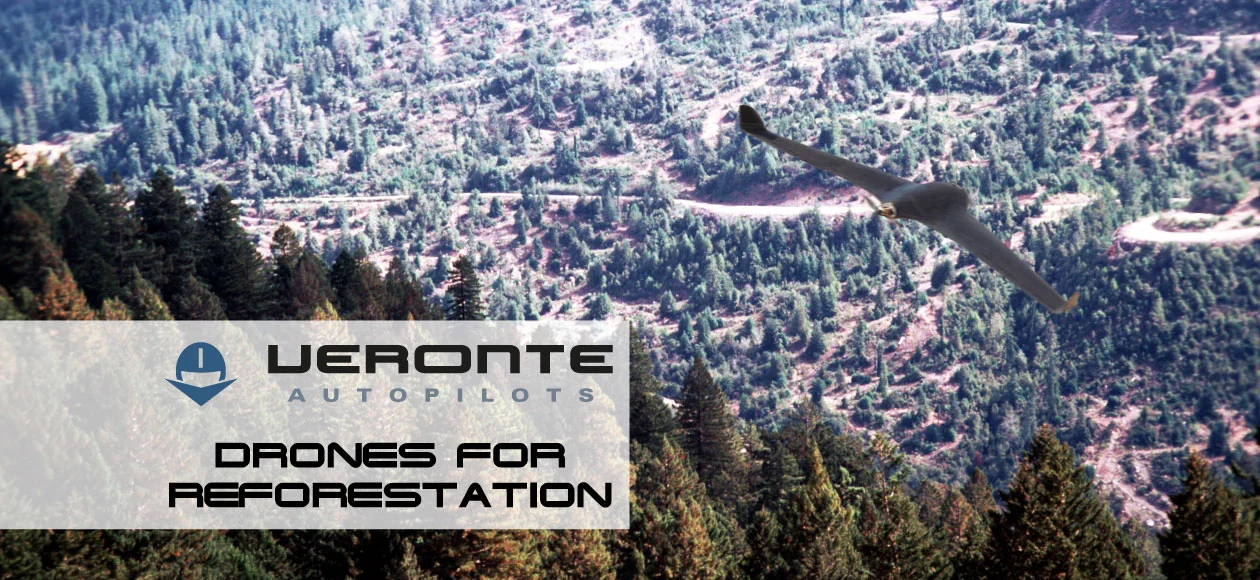
Land recovery after a fire is a work that requires so much time and resources, but trying to recover these burned lands using UAVs can be less costly and more efficient.
Tasks to perform after a fire
Preparing the land
After a fire, rains can cause serious damages to the orography of the land, and they usually remove seeds that should reforest the region. It is recommended to prepare and control river courses and their possible overflowing.
An UAV equipped with a good photography and video system is able to perform a detailed study of the burned area, obtaining cartographic maps and monitoring rivercourse evolution.
Remainder fire sanitation
To avoid insect pests, it is necessary to remove any burned residue left after a fire. Nevertheless, it is always advisable to perform a good selection of those rests that have to be removed since some of them, even apparently burned, can help to protect the land as well as some trees still have healthy roots and insides.
For this reason, an UAV with the proper tools is able to let workers supervise the area faster and safer, easily checking any remote area and effectively allowing to decide which parts of the area need a sanitation process.
Letting the land recover
After the two previous steps, it is advisable to leave the burned area alone for two years before the reforestation. During this phase, the use of UAVs is also recommended since they are highly efficient for monitoring tasks in burned areas.
Preparing the reforestation
During the years that the land is left to let it recover itself, it is also possible to perform some tasks: to prepare studies about the vegetation and terrain, to rebuild firewalls, paths, stakeouts, etc. UAVs can supervise the correct conditions and route of paths and firewalls, as well as being a very useful tool to perform studies of the burned land; stakeouts can even be prepared to have this kind of aerial tool for these purposes.
Reforestation
Finally, the last step would be to reforest the burned land. If the area is not reforested by itself, it can be performed some actions to accelerate the process through UAVs: an advanced technique consists of including as a payload of a drone some capsules containing clay and hydrogel mixed with substratum and fertilizer with tree seeds. Those capsules would be dropped from the drone considering a pre-configuration, and, with the following rains, the containing seeds would germinate.
NM& UAVs controlled by Veronte PIPE software are able to perform all the described actions. They incorporate an automatic pre-configuration for capsule dropping that only requires marking the area to reforest, and the UAV is automatically configured to fly on the selected area and scatter tree seeds.