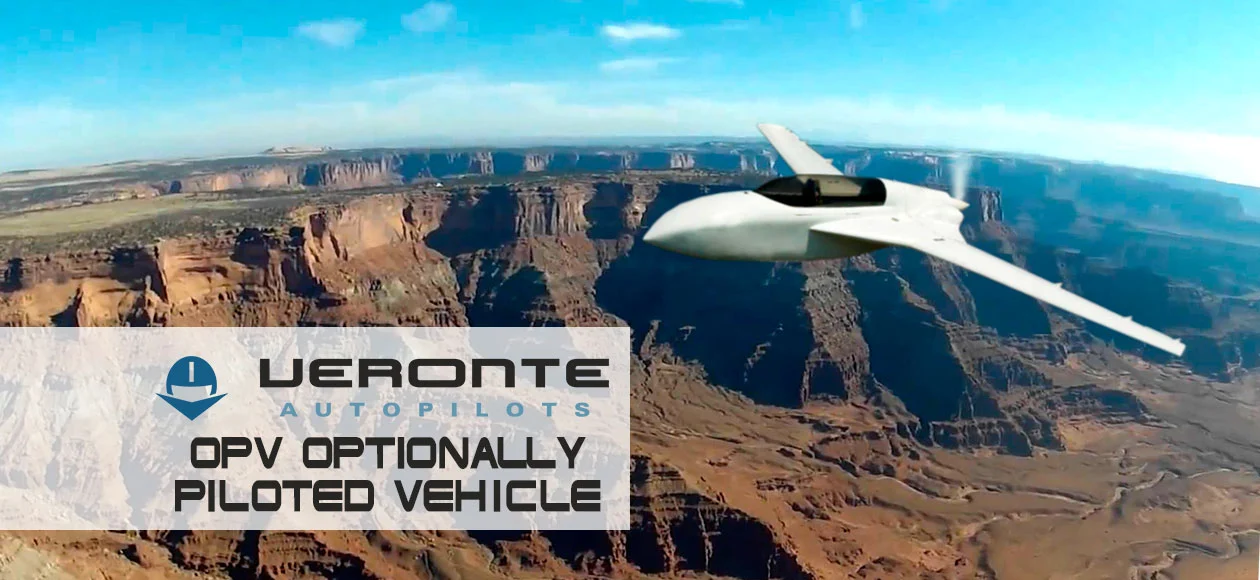
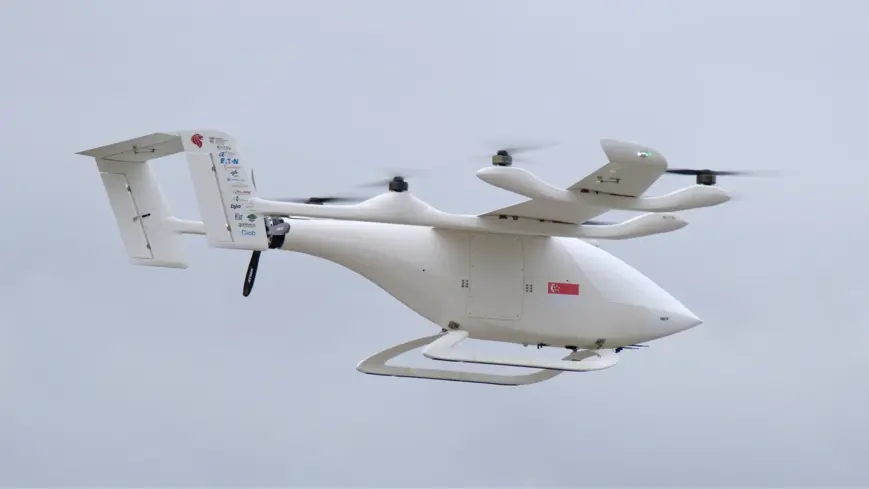
An OPV, or Optionally Piloted Vehicle, is a mix between a conventional manned aircraft and an Unmanned Aerial Vehicle (UAV). An OPV can optionally fly with or without crew on board. This kind of platform permits to combine performance in manned aircraft with functionalities from UAVs.
OPV aircraft permit the performance of complex operations, avoiding the limitations inherent to manual flight control. Moreover, with the presence of a pilot on board, it is possible to fly using the automatic control over areas where an UAV will not be allowed to fly, as over urban areas in many countries. As this is a manned aircraft, the pilot can take manual flight control of it at any time during the operation.
For certain operations, it is also interesting to transport the aircraft to the operation area while flying with manual control. Once in the work area, the aircraft can be operated fully autonomously, either with an onboard pilot or with a ground control center.
Furthermore, OPVs can operate in missions where the operator usually has a work overload and in dangerous locations. Some examples are the monitoring and observation of contaminated areas, the maritime search and rescue, the extinguishing and monitoring of forest fires, the control of coasts and borders, etc., where assisting the pilot with aircraft control permits him to focus on other tasks.
Characteristics of Veronte Autopilot OPV
Veronte Autopilot, in its configuration for OPVs, combines the qualities of Veronte Autopilot with the capabilities of manual control of manned aircraft. These flight control avionics are the core of the OPV, together with the actuators that control aircraft control surfaces. Veronte is compatible with almost any servomotor and ECU on the market, being compatible with CAN, serial, ARINC, and PWM devices.
Veronte permits two kinds of installations in OPVs: fly-by-wire and mechanical mounting. Fly-by-wire enables the integration of semiautomatic and assisted flight modes, in addition to the manual and automatic modes; requiring only the installation of sensors over pilot controls. On the mechanical configuration, it is not required any installation on the manual controls; with a simple switch on the control panel, it is possible to switch between automatic and manual mode.
Veronte Autopilot as the core of the system permits the integration of payloads, sensors, and special communications modules to increase the capabilities of OPVs. Even, if needed, it can be installed in multiple modules to integrate double or triple redundancy.