
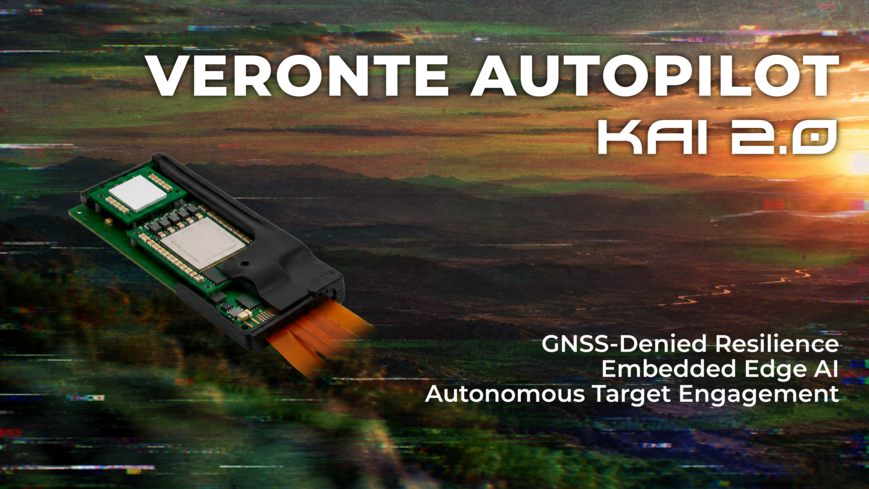
Embention releases upgraded Veronte KAI FCC for One-Way drones at MSPO
Discover Veronte KAI 2.2 with AI-based PNT, terminal guidance and scalable production for one-way drones in contested environments.
March 7, 2024
The drone market has experienced rapid growth and remarkable technological advancements in recent years. These unmanned aerial vehicles (UAVs) have found applications in various industries, from photography to agriculture, logistics, and entertainment. However, as the drone industry evolves, it must also align itself with aviation standards to ensure safety and seamless integration into the airspace, much like the early days of manned aviation.
Similar to the early stages of aviation, drones are quickly becoming an integral part of modern society. Their cost-effectiveness and versatility have revolutionized industries, providing innovative solutions to once-challenging tasks. Aerial photography and cinematography have been transformed by drones equipped with high-resolution cameras, capturing breathtaking perspectives that were previously unattainable. In agriculture, drones offer precise monitoring capabilities, allowing farmers to optimize crop health, detect irrigation needs, and identify areas affected by pests or diseases.
However, just as aviation underwent a transformative phase, the drone industry must navigate the path towards meeting aviation standards. Safety and regulatory compliance are of paramount importance to prevent accidents and safeguard public welfare. Governments and aviation authorities worldwide are actively working to establish comprehensive regulations and standards for drones. These regulations encompass crucial aspects such as flight altitude limits, remote identification protocols, operator licensing requirements, and mandatory training programs.
As drone manufacturers strive to meet aviation standards, technological advancements play a pivotal role. Collision avoidance systems, geofencing capabilities, and extended battery life are among the key areas of development. Researchers are actively exploring the creation of effective air traffic management systems, enabling drones to safely operate alongside manned aircraft.
Moreover, the establishment of robust communication and control protocols is vital for drones to achieve aviation standards. These protocols facilitate secure and reliable communication between drones, ground control stations, and air traffic management systems. Standardizing these protocols ensures interoperability and fosters a cohesive ecosystem where drones seamlessly operate within the airspace.
From Embention, we participate in working groups with EASA and other companies in the sector, where we regularly provide our feedback and ideas on the development of aviation regulations for UAVs. Thanks to this participation, we are up to date and prepared for any certification related to the sector.
While the drone market continues to grow at an astounding pace, the journey towards aviation standards is an ongoing process. Collaboration among governments, aviation authorities, and drone manufacturers is crucial to ensure the safe integration of drones into the airspace. Through the implementation of appropriate regulations, technological innovations, and standardized practices, the drone industry will continue to thrive, transforming industries, enhancing efficiency, and unlocking new realms of innovation.

Receive news & updates
Discover Veronte KAI 2.2 with AI-based PNT, terminal guidance and scalable production for one-way drones in contested environments.

The iMEDCAP consortium proudly announces the successful completion of the live pilot demonstration of its autonomous tactical medical evacuation system at NATO’s Vigorous Warrior 2026 exercise.

Learn about USV applications and advantages in marine exploration enhanced by Veronte Autopilot 1x for efficient autonomous control.
