

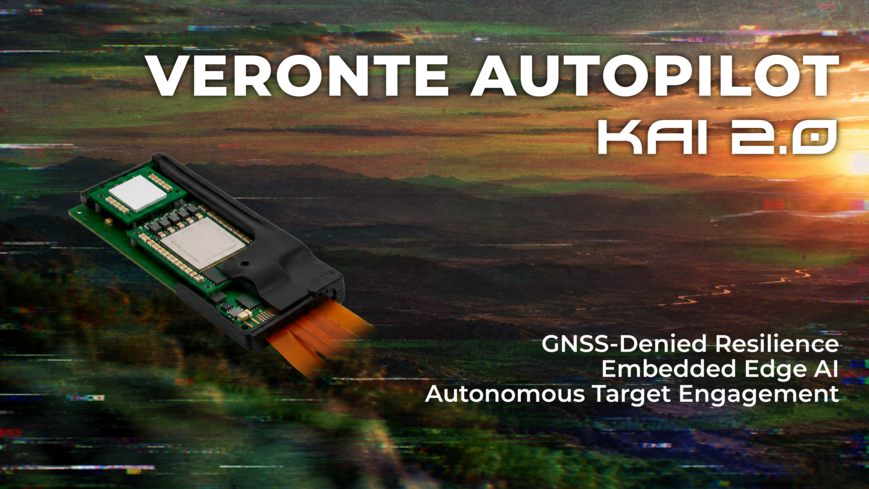
Embention releases upgraded Veronte KAI FCC for One-Way drones at MSPO
Discover Veronte KAI 2.2 with AI-based PNT, terminal guidance and scalable production for one-way drones in contested environments.

April 20, 2018
To ensure a safe flight, and according to the current regulations in the majority of countries, it is necessary to equip the UAV with automated procedures, which are activated when a specific unscheduled event is verified during the flight operation. The failures can be of different types and these are classified in a different way depending on the incidence that the failure has in the system (including the ground control station and the aerial unit). Depending on the gravity of them, it is indispensable to activate pre-defining routines of Fail-Safe or FTS (Flight Termination System).
In general, they can be divided into two classes: Non Critical and Critical. For the first ones, it is always possible to define a Fail-Safe that allows the platform to be recovered safely. This class includes loss of LOS link, loss of GPS, insufficient battery to complete the mission, etc.
In the Critical failure case, the UAS cannot safely follow a preconfigured route and the remote control by the pilot is not possible. In this case, it is necessary to activate a previously installed FTS on board, which ends immediately with possible sources of damage to third parties.
Depending on the platform’s size, the activation of the impact energy reduction system may also be required, which usually consists of a parachute. Included in this group are the motor losses (Rotary Wing), the block of the control surfaces (Fixed Wing) and, in general, all the essential components for a safe and controlled flight.
It is always important, on the part of the operator, to detail beforehand (normally in the design phase and during the first tests) the possible failures and unequivocally determine the detection of the same and the consequent reaction of the system.
The Veronte autopilot is capable of autonomously detecting system failures, both the ground control station and the air unit. Through the definition of automation and following a simple Boolean logic, the Veronte autopilot allows the activation of different types of Fail-Safe and FTS actions for each situation detected.

Receive news & updates
Discover Veronte KAI 2.2 with AI-based PNT, terminal guidance and scalable production for one-way drones in contested environments.

The iMEDCAP consortium proudly announces the successful completion of the live pilot demonstration of its autonomous tactical medical evacuation system at NATO’s Vigorous Warrior 2026 exercise.

Learn about USV applications and advantages in marine exploration enhanced by Veronte Autopilot 1x for efficient autonomous control.
