

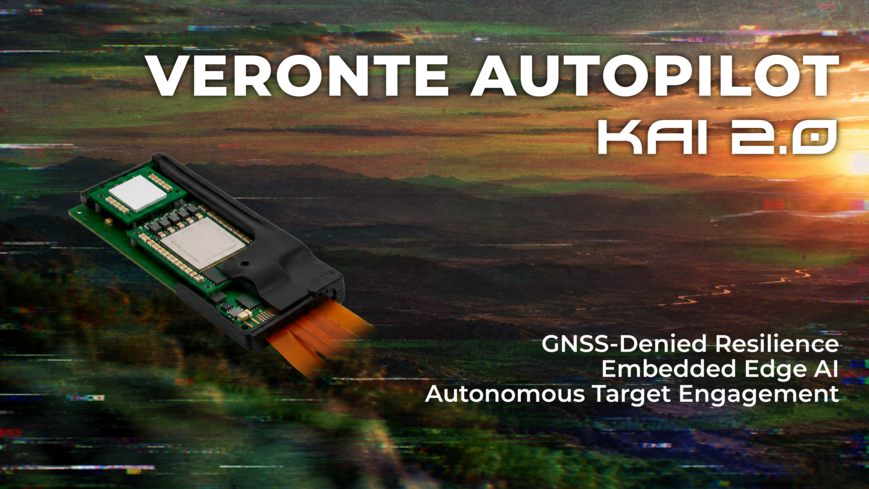
Embention releases upgraded Veronte KAI FCC for One-Way drones at MSPO
Discover Veronte KAI 2.2 with AI-based PNT, terminal guidance and scalable production for one-way drones in contested environments.
July 14, 2017
Light pollution is one of the matters that negatively affects our environment. Nowadays, this problem is not perceived as easily as others, but it keeps affecting our health, environment, and even some professions, with astronomical observations being the most affected.
Astronomers were the first ones to point out this issue, but night imagery taken to our planet from space, where the illumination of urban areas can be easily appreciated, made the population have greater awareness regarding light pollution. Some biological studies remark that it is affecting biodiversity and plant growth, migratory birds, insects, and many other elements of our environment.
On people, light pollution affects our circadian rhythm, our “biological clock,” which is responsible for regulating the physiologic functions of our organism. Regarding economical cost and energy consumption, some studies estimated that street lighting raised up to 830 million euros in Spain during 2014, an expenditure that could have been reduced up to 50% if the same street lighting was more efficient.
To optimize energy consumption and to control light pollution, an index can be calculated by creating maps and cartographic products through night mapping using drones. With that information, it is possible to redesign streetlights in cities, decreasing wasted light projected to the sky and adjusting light levels to the strictly necessary.
Currently, there are low-weight electronic components already on the market, such as photoelectric sensors used by cars, which can be installed in drones to control and monitor light pollution. These drones allow you to quickly gather light-level data from the area to check, creating thermal maps to determine the most affected areas.
In order to make any drone able to measure light pollution levels of a specific area, it is only necessary to mount the said sensors and Veronte Autopilot 1x in the unmanned vehicle. Besides, NM& drones are already equipped with Veronte Autopilot 1x, permitting them to operate immediately in order to gather light information efficiently.

Receive news & updates
Discover Veronte KAI 2.2 with AI-based PNT, terminal guidance and scalable production for one-way drones in contested environments.

The iMEDCAP consortium proudly announces the successful completion of the live pilot demonstration of its autonomous tactical medical evacuation system at NATO’s Vigorous Warrior 2026 exercise.

Learn about USV applications and advantages in marine exploration enhanced by Veronte Autopilot 1x for efficient autonomous control.
