
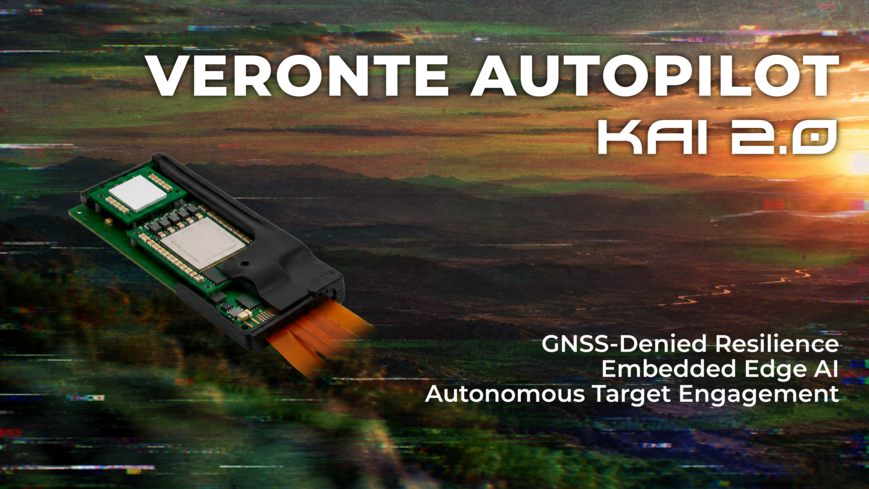
Embention releases upgraded Veronte KAI FCC for One-Way drones at MSPO
Discover Veronte KAI 2.2 with AI-based PNT, terminal guidance and scalable production for one-way drones in contested environments.
July 17, 2015
The multirotor drones, or multicopters, have been in vogue for a while now among UAV users for a wide variety of applications, replacing other systems like classic helicopters. With multirotor drones, it is possible to access small and interior places; with a low operation cost, it permits to take pictures close to buildings, bridges, constructions, crops,… Also, they enable flying at low altitudes or stationary, achieving high control in photography and framing, and bringing quick results.
Multirotor drones mainly use electric motors to accelerate and to move, avoiding the polluting gases from combustion engines, thanks to the high-efficiency lithium batteries used on these platforms. It should be noted that while more rotors the multicopter installs, the more stable and controllable it will be. Multicopters can be categorized according to their number of rotors, existing: quadcopters (4 rotors), hexacopters (6 rotors), octocopters (8 rotors), etc.
With respect to existing multirotor drones nowadays on the market, abound systems for amateur or hobby use. These units do not have a guarantee of reliability (essential for operation with professional imaging equipment) and integrate communications systems for operating within a few meters from the control station. These systems do not permit to configure the autonomous aircraft flight or have very limited options; these handicaps are overcome when a multirotor drone and the Veronte Autopilot 1x converge.
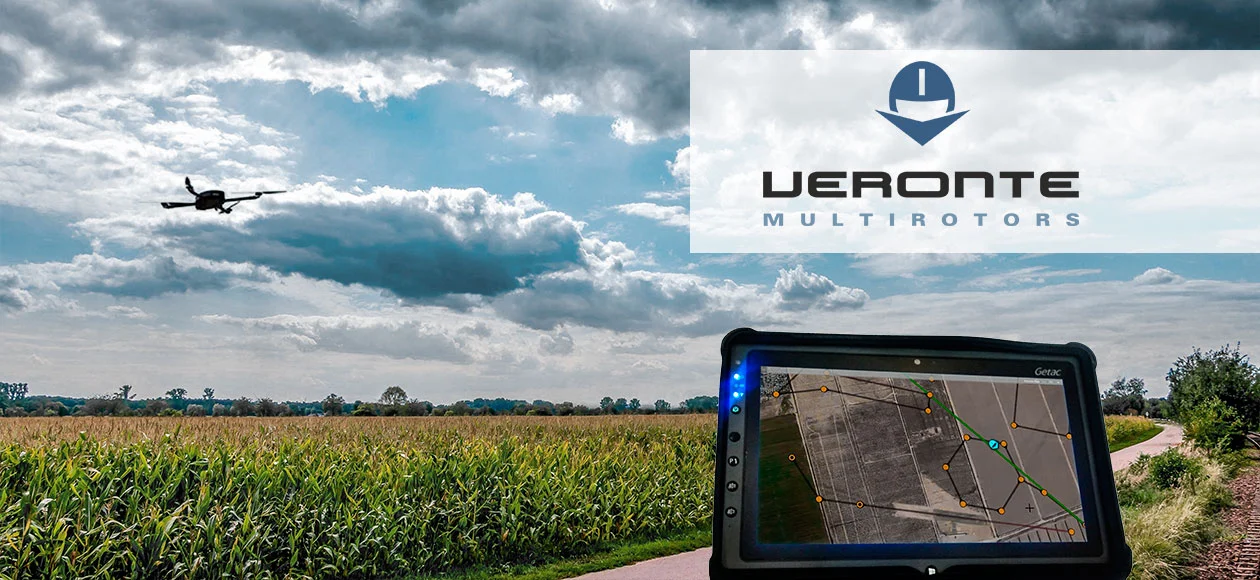
Veronte is a professional control system for high-performance applications where security and system integrity become crucial. Veronte allows completely autonomous flight in which you can control both the mission and the payload or gimbal, disposing of advanced functionalities for configuration of any maneuver or autonomous behavior during the flight. Manual control modes are also available in Veronte, making it possible to control aircraft or payloads from the joystick or the control station, controlling the system by simply tilting the tablet in the desired direction. Veronte TGS is a lightweight and portable ground control station that installs Veronte Autopilot 1x within a rugged tablet for high mobility applications.
Veronte Autopilot 1x is available in the OEM version, weighing just 90 grams, including all necessary components to control the platform (sensors, processors, GPS, etc.). Also, there are available redundant versions and the documentation necessary for obtaining flight permits and system certification. With this system, the pilot can take manual control at any time with a radio link up to 90 km, being compatible with operations in the absence of GPS, in which drone multirotors remain in stable flight, maintaining a fixed altitude and attitude.
This system is compatible with any shape and number of rotors. Thanks to the adaptive control, there are possible applications with tethered multirotor drones or those that the aircraft plant varies during the operation; painting of facades, construction control, surveillance, etc., taking advantage of the autonomy and security of these configurations.
In conclusion, multicopter-type UAV systems provide many possibilities of use by installing Veronte for both professional uses and hobby applications, permitting the use of professional equipment adapted to the needs of each user.

Receive news & updates
Discover Veronte KAI 2.2 with AI-based PNT, terminal guidance and scalable production for one-way drones in contested environments.

The iMEDCAP consortium proudly announces the successful completion of the live pilot demonstration of its autonomous tactical medical evacuation system at NATO’s Vigorous Warrior 2026 exercise.

Learn about USV applications and advantages in marine exploration enhanced by Veronte Autopilot 1x for efficient autonomous control.
