

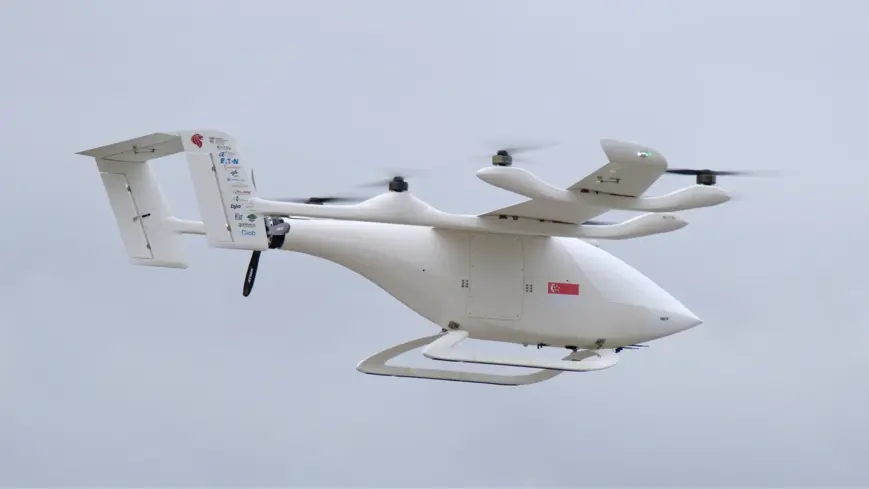
How Urban Air Mobility is getting ready for passengers: the NTU Singapore case
Singapore’s NTU flew its eVTOL prototypes in Germany. See what it means for urban air mobility, and why safety starts in flight control.
July 17, 2026
International regulations are increasingly requiring drones and VTOL aircraft operating in safety-critical scenarios to undergo airworthiness processes comparable to those applied to traditional manned aviation.
There are numerous standards and regulations applicable throughout the design, development and production lifecycle of an aircraft, issued by different regulatory and standardization bodies (e.g. SC-VTOL, STANAG 4703, STANAG 4671, STANAG 4586, EN 9100, ISO 9001, among others). For avionics development, the most widely adopted system-level standards include SAE ARP4754B (ED-79B) for system development and SAE ARP4761A (ED-135) for safety assessment. At item level, software, hardware and environmental qualification are typically developed according to DO-178C, DO-254 and DO-160, together with their EUROCAE equivalents ED-12C, ED-80 and ED-14G.
These airworthiness standards provide the framework for developing safety-critical avionics by ensuring that software, airborne electronic hardware and environmental qualification are carried out under rigorous development and verification processes. To achieve this, development activities are governed by the Design Assurance Level (DAL) methodology, which classifies systems according to their potential safety impact. Embention currently develops its avionics up to DAL-B, while continuing its roadmap towards DAL-A, the highest level of development assurance.
Until a dedicated technical standard, like ETSO in Europe or TSO in USA, becomes available for all UAS autopilot applications, certification projects continue to rely on demonstrating traceability between aircraft-level requirements and the corresponding autopilot requirements, implementation and verification evidence. This is why compliance with standards already published for manned aviation systems development assurance, such as DO-178C and DO-254, plays such an important role in modern autopilot development.
Once the complexity of an aircraft and its intended operation are defined, manufacturers face the challenge of designing an entire system that complies with the applicable certification basis and the corresponding Development Assurance Level (DAL) objectives. Every stage of development must follow defined processes while generating the evidence required to demonstrate compliance.
In this scenario, having critical subsystems that have already been developed following airworthiness standards represents a significant advantage. Critical equipment such as the autopilot can provide development artifacts, verification evidence, and documented processes that considerably reduce the certification effort required at aircraft level.
Depending on the certification programme, these artifacts may be integrated directly through traceability from aircraft system requirements to item-level requirements, together with the corresponding documentation package. In other cases, additional work may be necessary to address project-specific requirements, different DAL objectives or aircraft-specific configurations.
One of the most critical subsystems in any UAS or eVTOL is the flight control computer. Because it directly contributes to aircraft safety, it plays a central role during system safety assessments and throughout the certification process.
Having an autopilot developed in accordance with DO standards therefore represents a major step towards certification, ensuring that the the aircraft-level requirements allocated to the control system have been implemented following a development assurance process which guarantees its safe design and verification However, integrating a compliant autopilot into an aircraft does not automatically certify either the subsystem or the aircraft itself. Certification also depends on aircraft integration, operational concepts, mission profiles, safety assessments and the overall certification basis agreed with the certification authority. Currently, without any specific standard for UAS systems adopted by the main aviation authorities (EASA in Europe, FAA in USA), certification still remains at aircraft-level.
Without question, yes.
Developing a safety-critical system that complies with aviation standards requires a substantial investment in engineering resources, specialized personnel, verification activities, and certification documentation. Acquiring an autopilot that has already been developed following DO-178C, DO-254 and DO-160 significantly reduces this effort by providing mature development processes, configuration management, quality assurance, verification evidence, and documented traceability.
Instead of developing an entirely new avionics platform, aircraft manufacturers can focus on demonstrating compliance at aircraft level while leveraging existing certification-ready development artifacts. This can save years of engineering work while substantially reducing both development costs and certification risk.
In most certification programmes, manufacturers only need to demonstrate that the autopilot configuration, including Parameter Data Item Files (PDIFs), meets the aircraft-specific certification requirements. Because the underlying software has already been developed under rigorous airworthiness processes, the remaining activities are typically focused on integration, aircraft-level verification and traceability rather than low-level hardware and software development.
In addition, many aircraft certification standards require that their systems be developed following development assurance processes, with ARP4754B, DO-178C, and DO-254 being the most accepted standards for systems, software, and electronic hardware, respectively. Integrating a compliant autopilot in an aircraft will guarantee that those certification requirements are met at system level without an additional effort from the aircraft designer.
At Embention, we have adopted aviation airworthiness standards throughout the entire product lifecycle. From the earliest design stages, our avionics are developed following internationally recognized certification processes such as DO-178C for airborne software, DO-254 for airborne electronic hardware and DO-160 for environmental qualification, while system development and safety assessments follow ED-79B/ARP4754B and ED-135/ARP4761A methodologies.
This approach allows us to deliver certification-ready avionics that significantly reduce the effort required by aircraft manufacturers pursuing UAS and eVTOL certification.
Embention is the first company specialized in autopilots for unmanned aircraft to be approved as both a Production Organization Approval (POA) and an Alternative Procedure to Design Organization Approval (APDOA) organization. Under EASA supervision, Embention is also the only company in its sector authorized to apply for and hold ETSO-C198 autopilot authorizations.
As part of its certification roadmap, Embention is working together with EASA towards obtaining an ETSOA (European Technical Standard Order Authorization) for the Veronte Autopilot. Once completed, certified equipment will be delivered with EASA Form 1, providing aircraft manufacturers with certified airborne equipment that can substantially simplify and accelerate UAS and eVTOL certification programmes.
Embention has further strengthened its regulatory compliance by obtaining approval from the Spanish Aviation Safety and Security Agency (AESA) for the integration of its Information Security Management System (ISMS) into its Production Organization Approval (POA). In addition to its ISO 27001 certification, the company now complies with the European Part-IS regulation, meeting the latest EASA cybersecurity requirements for aeronautical design and production organizations. This milestone reinforces Embention’s commitment to the highest standards of airworthiness, safety, and cybersecurity, ensuring its POA approval remains fully aligned with the evolving European regulatory framework.
Our certification experience has been built through participation in some of the industry’s most demanding certification projects.
Embention has supplied safety-critical avionics for the Amazon Prime Air MK30 programme, contributed to the first 85 kg fixed-wing RPAS Type Certificate in Europe, participated in the first Design Authorization Certificate for an RPA issued by ANAC Brazil, successfully completed the VVZ2 process with the Luftfahrtamt der Bundeswehr (LufABw) and continues to support multiple next-generation eVTOL certification programmes around the world.
This practical certification experience allows our engineering teams to understand not only the applicable regulations but also the real challenges manufacturers face during aircraft certification.
Verification is a fundamental part of any successful certification programme, playing a key role in demonstrating compliance with the applicable requirements for both software and hardware.
Embention has an independent Verification Department responsible for verification activities across both software and hardware. Engineers work within a continuous development environment that maintains complete traceability between requirements, verification procedures, results and certification evidence throughout the entire development lifecycle.
Software verification follows the guidance established by DO-178C, including High-Level Requirements (HLR) Based Tests and Low-Level Requirements (LLR) Unit Tests. Hardware verification is conducted in accordance with the applicable guidance of DO-254, covering the verification of hardware requirements and design implementation through appropriate analyses, reviews, inspections and tests. These verification activities are integrated throughout the development lifecycle, supporting continuous compliance and providing objective evidence for certification as the product evolves.
As part of the design verification process, environmental qualification is another essential pillar of certification.
Embention performs qualification testing according to DO-160 and MIL-STD-810, evaluating the resistance of avionics to vibration, temperature, pressure, shock and other environmental conditions representative of real flight operations.
Our laboratories and test equipment enable products to be evaluated and validated throughout the development process, helping to identify and mitigate technical risks before and during formal certification campaigns, while increasing confidence in compliance demonstrations.
Any development assurance process needs compliant Quality Assurance process.
In addition to meet DO Quality and Process Assurance objectives, Embention operates under certified Quality Management Systems compliant with ISO 9001:2015 and EN 9100:2018, ensuring controlled development processes, configuration management, document control, continuous improvement, and complete traceability across the entire product lifecycle.
This quality framework provides aircraft manufacturers with confidence that every development activity is performed according to internationally recognized aerospace standards.
Reliability and safety assessment are integrated into every stage of product development.
Embention performs MTBF (Mean Time Between Failures) analyses as part of its System Development Assurance activities, following recognized industry methodologies for reliability estimation.
Safety assessment activities are performed according to ED-135/ARP4761A, incorporating techniques such as Preliminary System Safety Assessment (PSSA), Fault Tree Analysis (FTA) and other safety analyses required to demonstrate compliance with certification objectives.
Together, these activities provide a robust foundation for demonstrating system reliability and safety throughout the certification process.
In a typical project, customers present the functional and certification requirements of their aircraft. Our engineering teams define the integration activities required to satisfy the aircraft-level requirements while our certification specialists adapt the existing certification documentation to the specific project.
This work includes requirements traceability, configuration documentation, verification activities and the generation of all integration records necessary to support aircraft certification. Rather than starting from scratch, manufacturers benefit from mature certification artefacts that have been continuously improved through multiple certification programmes.
As a result, customers receive not only a high-performance autopilot, but also the engineering support and certification documentation required to facilitate integration into their aircraft.
Our involvement goes far beyond supplying avionics. Throughout every project, Embention works alongside aircraft manufacturers to reduce certification effort, minimize technical risk and accelerate the path towards UAS and eVTOL certification.

Receive news & updates
Singapore’s NTU flew its eVTOL prototypes in Germany. See what it means for urban air mobility, and why safety starts in flight control.
Embention presents Veronte KAI upgrades, expands defense partnerships, and showcases autonomous flight avionics at MSPO Poland and UNVEX Spain.
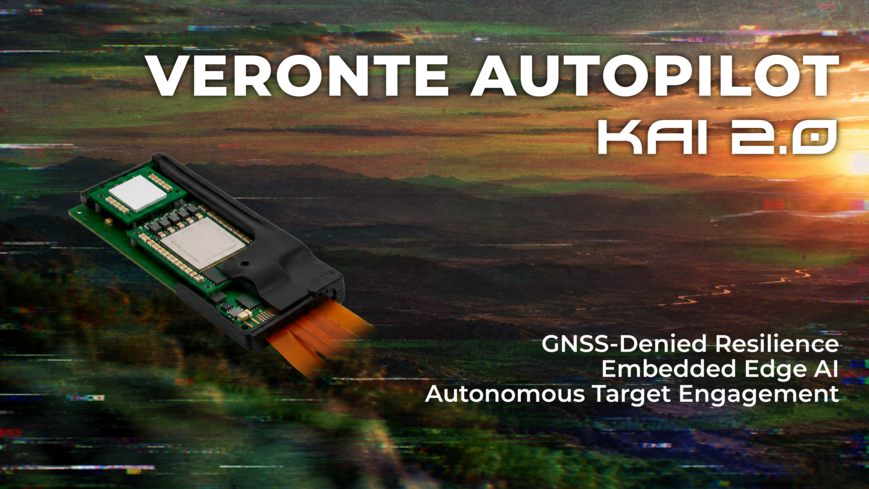
Discover Veronte KAI 2.2 with AI-based PNT, terminal guidance and scalable production for one-way drones in contested environments.
