

View lesson
 5 min
5 minIntroduction to eVTOL aircraft and Advanced Air Mobility (AAM)
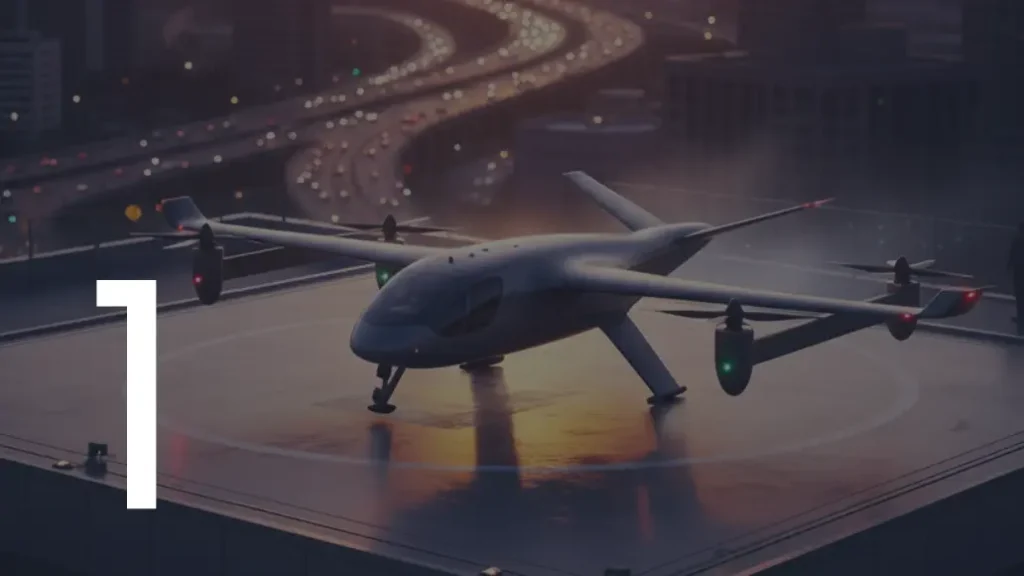

Aviation is currently undergoing a period of structural transformation driven by the convergence of new technologies, emerging societal needs, and increasing regulatory and environmental pressure. Within this context, electric Vertical Take-Off and Landing (eVTOL) aircraft have emerged as one of the key pillars of Advanced Air Mobility (AAM). These aircraft do not represent a simple incremental evolution of existing platforms, but rather a profound shift in how low-altitude air transportation is conceived, designed, and operated.
The objective of this first lesson is to establish the conceptual, technological, operational, and regulatory framework required to understand what eVTOLs are, why they are being developed, which problems they aim to solve, and what major challenges must be addressed before large-scale adoption becomes possible. This context is essential for approaching, in subsequent lessons, the architectures, systems, certification processes, and operational concepts of this new class of aircraft.
Definition of eVTOL (Electric Vertical Take-Off and Landing)
An eVTOL is an aircraft defined by three fundamental characteristics: it uses electric propulsion, it is capable of vertical take-off and landing, and it is designed from the outset to operate with high levels of automation.
Electric propulsion replaces internal combustion engines with electric motors powered primarily by batteries. This enables distributed propulsion architectures, reduces mechanical complexity, lowers local emissions, and opens the door to a significant reduction in noise, one of the most critical factors for operation in urban environments.
In practice, many current eVTOL designs also incorporate hybrid-electric propulsion systems, combining electric motors with onboard energy generation sources such as turbogenerators or range extenders. These hybrid architectures aim to increase operational range, endurance, and mission flexibility while maintaining the benefits of electric propulsion, particularly during critical phases such as take-off, landing, and low-altitude urban flight.
Vertical take-off and landing capability removes the need for conventional runways, allowing operations from compact infrastructure such as vertiports, which can be integrated into urban or peri-urban areas. This feature is essential to enabling point-to-point operations and reducing total travel time.
Finally, eVTOL aircraft are conceived as digitally native aircraft, incorporating fly-by-wire flight control systems, advanced avionics, and a strong reliance on software to ensure safety, efficiency, and operational scalability.
Differences between drones, helicopters, and manned and unmanned eVTOLs
Although eVTOLs share characteristics with both drones and helicopters, it is essential to recognize them as a distinct aircraft category.
Drones or UAS have traditionally been unmanned and operate under risk-based regulatory frameworks, primarily focused on protecting people on the ground. While many technologies used in eVTOLs, such as distributed electric propulsion and automated control, originate from the UAV domain, safety and certification requirements are fundamentally different when passengers are carried.
Helicopters, on the other hand, have offered VTOL capability for decades, but rely on mechanically complex architectures involving a main rotor and transmission systems. These designs result in high maintenance costs, elevated noise levels, and limited scalability for dense urban operations.
eVTOLs, whether manned or unmanned, aim to combine the advantages of both worlds: the VTOL flexibility of helicopters, the electrification and automation of UAV systems, and the safety standards of crewed aviation. In the near term, most eVTOLs will be piloted, but with a clear roadmap toward progressive workload reduction and, ultimately, autonomous operations.
Advanced Air Mobility (AAM) and Urban Air Mobility (UAM)
Advanced Air Mobility (AAM) is a broad concept encompassing the use of new aircraft types, digital systems, and operational models to enable safe, efficient, and sustainable air transportation in new market segments.
Within AAM, Urban Air Mobility (UAM) focuses specifically on operations within and around metropolitan areas. Its goal is to alleviate ground congestion, improve connectivity, and provide fast transportation alternatives over short and medium distances.
eVTOL aircraft are the primary enabling vehicles for UAM, but the concept extends well beyond the aircraft itself. It includes unmanned and manned traffic management systems, integration with urban infrastructure, digital booking and operational platforms, and public acceptance of these new mobility solutions.
Expected use cases for eVTOL aircraft
eVTOL use cases span multiple domains, each with different levels of complexity and maturity.
The most visible application is urban passenger transport, commonly referred to as “air taxi” services. In this scenario, eVTOLs operate short, frequent routes within urban areas, connecting strategic locations such as airports, business districts, and major transport hubs.
Another important use case is regional transportation, where eVTOLs may cover longer distances between nearby cities or poorly connected regions, acting as a complement to rail and conventional aviation.
Cargo and logistics operations represent a use case with lower initial regulatory barriers, particularly for unmanned operations. These include the transport of critical goods, medical supplies, and time-sensitive cargo.
Applications in emergency services are also highly relevant, including medical evacuation, disaster response, and rapid intervention support. In such scenarios, VTOL capability and fast deployment provide clear advantages over traditional platforms.
Key challenges for eVTOL adoption
Despite their potential, eVTOL aircraft face significant challenges that condition their viability.
Safety is the central challenge. As aircraft intended to operate over populated areas, eVTOLs must achieve extremely high safety levels, with redundant architectures, fault tolerance, and predictable behavior even in degraded scenarios.
Noise is another critical factor. Although eVTOLs are expected to be quieter than helicopters, the frequency and proximity of urban operations require strict acoustic control to ensure social acceptance.
Certification represents one of the most demanding challenges. Aviation authorities have developed special conditions for VTOL aircraft that combine traditional aviation requirements with new approaches, but certification remains complex, costly, and rigorous.
Finally, airspace integration requires new traffic management concepts, interoperability with existing systems, and close coordination between operators, service providers, and authorities.
Industry landscape and technology maturity
The eVTOL sector is currently transitioning from development to industrialization. Multiple manufacturers have advanced prototypes, active flight test programs, and defined certification roadmaps.
From a technological standpoint, many key components, electric motors, power electronics, and flight control systems, have reached sufficient maturity. However, aspects such as battery energy density, certification of complex software, and large-scale operations remain active areas of development.
On the regulatory side, the foundations are in place, but operational experience will be critical in refining and consolidating the framework in the coming years.
Conclusion
eVTOL aircraft represent a profound transformation of aviation and mobility as a whole. More than a new aircraft type, they constitute a new transportation system, in which technology, regulation, operations, and social acceptance must evolve in a coordinated manner.
This lesson has established the context required to understand why eVTOLs matter, which problems they aim to solve, and the challenges they face. In Lesson 2, the focus will shift to a detailed analysis of eVTOL architectures and configurations, and how design choices influence performance, safety, and certification.
