

View lesson
Course content
 7 min
7 minA comparative analysis: attack, defense, and deception
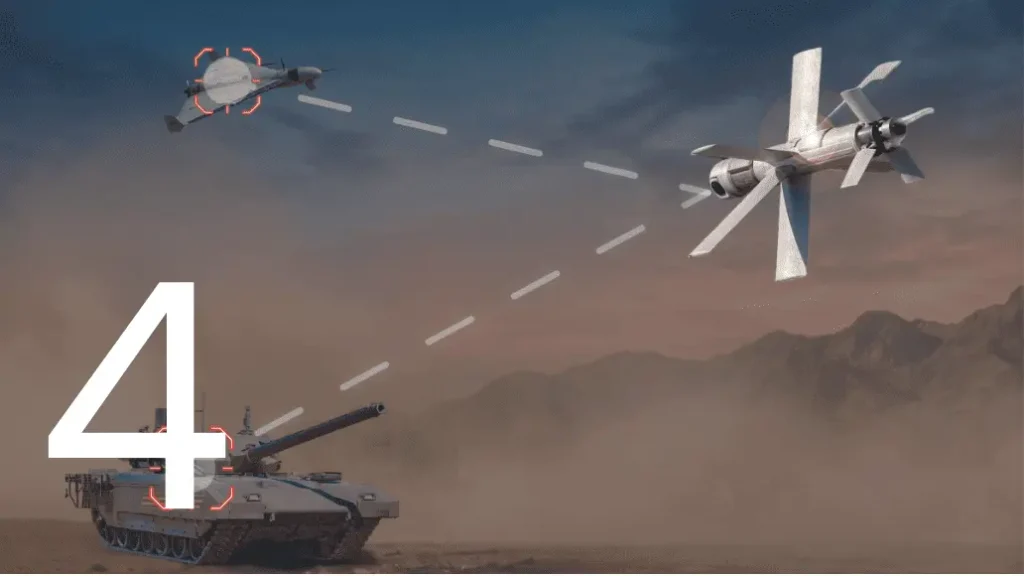

Over the past lessons, we have conducted deep dives into the specialized categories of expendable Unmanned Aerial Systems (UAS). We initially focused on the attackers (Loitering Munitions) and the defenders (C-UAS Interceptors). However, to fully understand the one-way tactical landscape, we must introduce the third critical pillar of this ecosystem: Decoy Drones (Deception platforms).
While Loitering Munitions, C-UAS Interceptors, and Decoy Drones all fall under the umbrella of “One-Way Drones”, meaning they are engineered for a single flight cycle without recovery, their operational objectives dictate entirely different engineering solutions. In this lesson, we will perform a comprehensive comparative analysis of these three platforms. We will contrast their mission profiles and terminal logic, while examining the critical avionics that unite them.
Mission profiles: ISR persistence, kinematic interception, and force depletion
The fundamental divergence between these three systems stems from their operational initiation and terminal objectives. This mission profile dictates every subsequent aerospace engineering and avionics design decision.
The attack profile (Loitering Munitions): ISRpPersistence and tactical endurance
A loitering munition (LM) is deployed offensively to establish aerial dominance over a designated operational theater. While they are fully capable of being launched to execute a direct, immediate strike against a pre-defined coordinate, their primary tactical advantage and defining characteristic is “persistence.” Once launched, it typically navigates to an area of interest and transitions into a high-endurance loiter pattern. Its operational objective is to maintain prolonged Intelligence, Surveillance, and Reconnaissance (ISR) coverage, forcing concealed high-value assets to emit signals or break cover.
The defense profile (C-UAS Interceptor): time-critical kinematic response
A C-UAS interceptor operates in a state of high-alert readiness and is launched exclusively in response to a confirmed inbound threat. Its flight profile is defined by strict time constraints and minimal latency. When early warning radar networks detect a hostile UAV breaching a defensive perimeter, the interceptor executes a time-critical launch. Its mission requires an immediate, high-angle climb and maximum acceleration to close the interception vector. The system must achieve a kinetic kill against a highly dynamic, evasive aerial target in three-dimensional space before the hostile asset reaches its payload release point.
The deception profile (Decoy Drones): signature emulation and asymmetric depletion
Decoy drones are deployed proactively to execute electronic and psychological warfare rather than kinetic destruction. A decoy is engineered to simulate the radar cross-section (RCS), thermal signature, and flight kinematics of high-value attack assets (such as cruise missiles or strike fighters). By saturating a contested airspace, decoys force enemy integrated air defense systems (IADS) to activate their Active Electronically Scanned Array (AESA) radars, thereby exposing their positions for counter-battery fire. Furthermore, they achieve “asymmetric magazine depletion.” By compelling the defending force to expend multi-million-dollar surface-to-air missiles (SAMs) on expendable platforms costing a fraction of the price, the attacker effectively neutralizes the enemy’s defensive capabilities through economic and logistical attrition.
Terminal guidance and end-of-flight logic
The final seconds of the flight highlight the differences in how the autopilots manage their ultimate fate.
Loitering Munition: the top-down kinetic strike
When locked onto a ground target, the LM executes a “top-down” attack profile, pitching into a steep vertical dive to strike the weakest armor on top of a vehicle. The onboard camera simply needs to keep the target centered as it descends.
C-UAS interceptor: proportional navigation
The interceptor’s autopilot continuously calculates a lead-pursuit trajectory. If the hostile drone banks left, the interceptor fires its control surfaces to “cut the corner” and intersect the target in 3D space, requiring millisecond-level reaction times.
Decoy Drone: pre-programmed martyrdom
A decoy drone rarely has a “target” to hit. Its terminal phase is essentially flying a pre-programmed path directly into the heart of the enemy’s air defense envelope. The autopilot navigates through complex waypoints designed to trigger early warning systems. The drone simply flies its route until an enemy missile destroys it, or until it runs out of fuel and crashes harmlessly, having successfully distracted the enemy and depleted their magazine.
The shared core: autopilots and autonomy
Despite their diametrically opposed payloads and mission profiles, the most advanced one-way drones share a common technological foundation. They are all unified by the absolute necessity for high-grade avionics.
- The requirement for deterministic Flight Controllers: Whether flying slowly for hours (LM), executing highly aggressive maneuvers in a two-minute intercept (C-UAS), or flying a rigid deception path to simulate a fighter jet (Decoy), the flight control system cannot fail. All three platforms require certificable-grade autopilots (like those found in the Embention ecosystem) that provide deterministic, aerospace-grade reliability.
- 2. GNSS-denied navigation: All one-way drones operate in modern Electronic Warfare (EW) environments where GPS/GNSS is actively jammed. Consequently, they rely on alternative navigation. If an LM or Interceptor loses GPS, they use Visual Based Navigation (VBN) to find their targets. If a Decoy loses GPS, its autopilot must seamlessly transition to Inertial Navigation Systems (INS) or terrain-matching algorithms to ensure it continues flying its deceptive route into enemy territory without satellite guidance.
- 3. swarm logic and multi-agent coordination: Perhaps the most critical shared technology for the future is swarm coordination. A single decoy is easily ignored; a swarm of fifty decoys mixed with ten real loitering munitions creates an unsolvable mathematical problem for air defenses. Decoys fly in synchronized formations to overwhelm radar screens, while C-UAS interceptors use the same swarm logic in reverse, coordinating multiple defensive strikes simultaneously to protect the airspace.
In summary, while the operational shells and payloads of LMs, Interceptors, and Decoys sit at different ends of the engineering spectrum, their brains are built from the exact same DNA. The effectiveness of one-way tactical aviation is entirely dependent on the fusion of ruggedized autopilots, autonomous navigation, and intelligent swarm logic.
