

View lesson
Course content
- The Future of Autonomous Flights: Sense and Avoid and Mandatory Regulations●
- ADS-B vs. Remote ID: Technical Analysis and Operational Differences
- What is the ADS-B System? Automatic Dependent Surveillance-Broadcast
- What is Remote ID? The Digital Identity of Drones
- Prior context: the airspace challenge and UAS integration
 5 min
5 minThe Future of Autonomous Flights: Sense and Avoid and Mandatory Regulations

The Imperative for Autonomous Sense and Avoid Systems
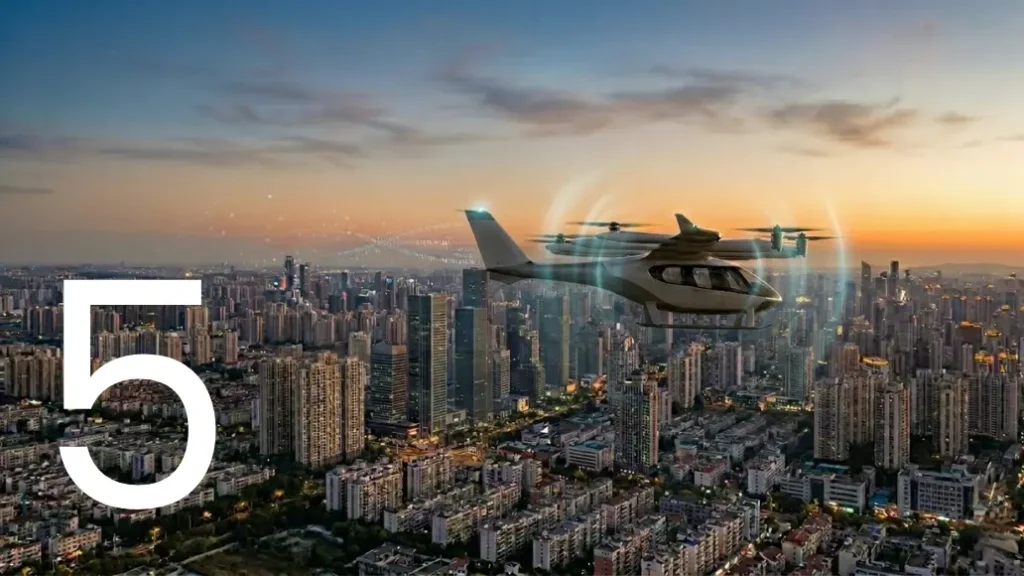
The ultimate operational goal for the global Unmanned Aircraft Systems industry is the routine execution of fully autonomous, Beyond Visual Line of Sight operations. Achieving this milestone is the absolute prerequisite for unlocking the immense economic and logistical potential of drone technology, ranging from automated intercity cargo delivery to the deployment of passenger-carrying Electric Vertical Takeoff and Landing vehicles in densely populated urban centers. However, operating an aircraft beyond the visual range of a human pilot introduces profound safety challenges that legacy aviation frameworks are entirely unequipped to handle. In a traditional manned aircraft, the pilot acts as the ultimate sensory processor, utilizing human vision to detect incoming traffic and human reflexes to execute evasive maneuvers. When an aircraft transitions to fully autonomous, beyond-line-of-sight operations, this critical human-in-the-loop safety net is entirely removed. To safely replace the human pilot, aerospace engineers must design and implement highly sophisticated digital architectures known as Sense and Avoid systems.
The necessity for these autonomous systems is driven by the strict limitations of physics and telecommunications. In a remotely piloted scenario, relying on a human operator situated at a distant Ground Control Station to manually avoid mid-air collisions is fundamentally unsafe. The process of transmitting high-definition video feeds or radar telemetry from the drone to the ground station, waiting for human cognitive processing and decision-making, and subsequently transmitting the mechanical control commands back to the aircraft introduces severe latency into the control loop. In a scenario where two aircraft are approaching each other at high closure rates, a latency of even a few seconds will inevitably result in a catastrophic collision. Therefore, the processing power and the decision-making authority must reside entirely onboard the aircraft. The unmanned vehicle must possess the deterministic capability to sense its immediate electromagnetic and physical environment, independently recognize a collision threat, and execute a mathematically optimized evasive maneuver instantly, completely independent of the ground control data link.
This requirement for absolute autonomy elevates the role of onboard sensors from simple telemetry broadcasters to critical life-safety instruments. The Automatic Dependent Surveillance-Broadcast system, specifically the ADS-B In receiving capability detailed in previous modules, serves as the primary cooperative sensor in this autonomous architecture. By continuously ingesting the state vector data broadcasted by surrounding manned and unmanned aircraft, the drone is provided with a high-fidelity, real-time map of the local airspace. However, receiving this data is only the first step in the Sense and Avoid pipeline. The raw data packets containing latitude, longitude, altitude, and velocity must be instantaneously processed by the central flight controller to calculate the precise interception geometries of all surrounding traffic. This demands an autopilot with immense computational power and software engineered to the highest aviation safety standards, capable of making life-or-death spatial calculations in a fraction of a second without encountering processing bottlenecks or software exceptions.
Avionics Integration and Virtual Force Fields in the Veronte Autopilot
The practical application of these complex Sense and Avoid algorithms requires seamless integration between the sensory hardware and the central flight control system. High-reliability avionics suites, most notably the Veronte Autopilot 1x engineered by Embention, are specifically designed to execute these advanced autonomous functions. When an unmanned aircraft equipped with the Veronte ecosystem receives an ADS-B squitter from an approaching aircraft, the autopilot does not merely display a warning to the remote operator; it actively internalizes the threat into its proprietary navigation matrix. The flight controller utilizes the incoming telemetry to project the future trajectory of the intruding aircraft, continuously comparing that projected path against its own planned mission route. To manage this spatial relationship safely, the autopilot mathematically constructs a three-dimensional protective volume, often conceptualized as a virtual force field, completely surrounding the unmanned aircraft.
This virtual force field is a dynamic, configurable safety perimeter dictated by the specific aerodynamic capabilities of the drone and the strict regulatory separation minimums required in that specific airspace class. As long as the projected trajectory of the intruding aircraft remains outside this virtual force field, the autopilot continues executing its primary mission without interruption. However, if the algorithms calculate that an approaching helicopter or general aviation plane will breach this protective bubble, the autopilot instantly transitions from mission execution mode to emergency evasion mode. The Veronte Autopilot autonomously calculates the most optimal escape vector. This calculation is not a random movement; it is a highly deterministic mathematical equation designed to maximize the distance between the two aircraft while minimizing the deviation from the original flight path and respecting the aerodynamic limits of the airframe to prevent an aerodynamic stall or structural failure.
The execution of this evasive maneuver happens entirely autonomously. The autopilot commands the motor controllers and aerodynamic control surfaces to violently, yet safely, alter the aircraft’s pitch, roll, and yaw, repelling the drone away from the intruder as if an invisible magnetic force were pushing them apart. Crucially, a highly advanced Sense and Avoid system encompasses more than just the immediate evasion; it must also manage the post-conflict scenario. Once the autopilot’s sensors confirm that the intruding aircraft has safely passed and the conflict geometry is fully resolved, the flight controller autonomously calculates a new, safe trajectory to return the drone to its original mission profile. It resumes its predefined waypoints, stabilizes its payload, and continues its operation without requiring a manual reset from the ground control station. This closed-loop autonomy—detecting the threat, calculating the evasion, executing the maneuver, and resuming the mission—represents the pinnacle of modern avionics engineering and is the absolute technological foundation for the future of unmanned aviation.
Regulatory Mandates and the Pathway to Urban Air Mobility
The transition from theoretical engineering to daily operational reality is entirely governed by the regulatory frameworks established by global aviation authorities, such as the Federal Aviation Administration in the United States and the European Union Aviation Safety Agency. For years, advanced Sense and Avoid capabilities were viewed as optional safety enhancements, utilized primarily by specialized military contractors or experimental research institutions. However, the imminent arrival of the Urban Air Mobility sector has fundamentally altered the regulatory landscape. To authorize fleets of autonomous Electric Vertical Takeoff and Landing aircraft to transport civilian passengers or heavy cargo over densely populated metropolitan areas, aviation authorities are demanding safety metrics that mirror, or even exceed, the rigorous standards applied to commercial passenger airlines. Consequently, the integration of deterministic Sense and Avoid systems, powered by collaborative sensors like ADS-B In, is rapidly transitioning from an optional operational advantage to a strict, non-negotiable legal mandate.
Regulators recognize that the future airspace will be a highly complex ecosystem where manned medical helicopters, autonomous delivery drones, passenger air taxis, and general aviation aircraft must seamlessly coexist. In this environment, relying solely on visual flight rules or human air traffic controllers is an impossibility. The mandated solution is comprehensive electronic conspicuity paired with autonomous conflict resolution. Regulators are structuring certification pathways that require Unmanned Aircraft Systems to prove, through exhaustive software and hardware validation processes, that their onboard flight controllers can reliably process cooperative traffic data and consistently avoid collisions even in the event of a total command and control link failure with the ground station. This is why the integration of high-reliability autopilots, developed under stringent aviation standards like DO-178C for software and DO-254 for hardware, is critical for Original Equipment Manufacturers seeking type certification for their autonomous vehicles.
Furthermore, the regulatory future points toward an architecture of deep sensor redundancy. While ADS-B In provides excellent cooperative data regarding aircraft that are properly equipped and broadcasting, aviation authorities are increasingly requiring systems to also detect non-cooperative obstacles, such as birds, unmapped terrain, or legacy aircraft without active transponders. Therefore, the future of autonomous flight relies on sensor fusion, where the autopilot simultaneously ingests data from ADS-B receivers, Remote Identification modules, millimeter-wave radar, and optical LiDAR systems. The flight controller must aggregate this massive influx of multi-spectral data to form a flawless, real-time understanding of its environment. For the aeronautical engineers training within the Embention UAM Academy, mastering the integration of these critical avionics—understanding the distinct legal necessity of Remote Identification and the tactical safety imperative of ADS-B driven Sense and Avoid—is the essential skillset required to design, certify, and deploy the autonomous aerospace networks of tomorrow.
